
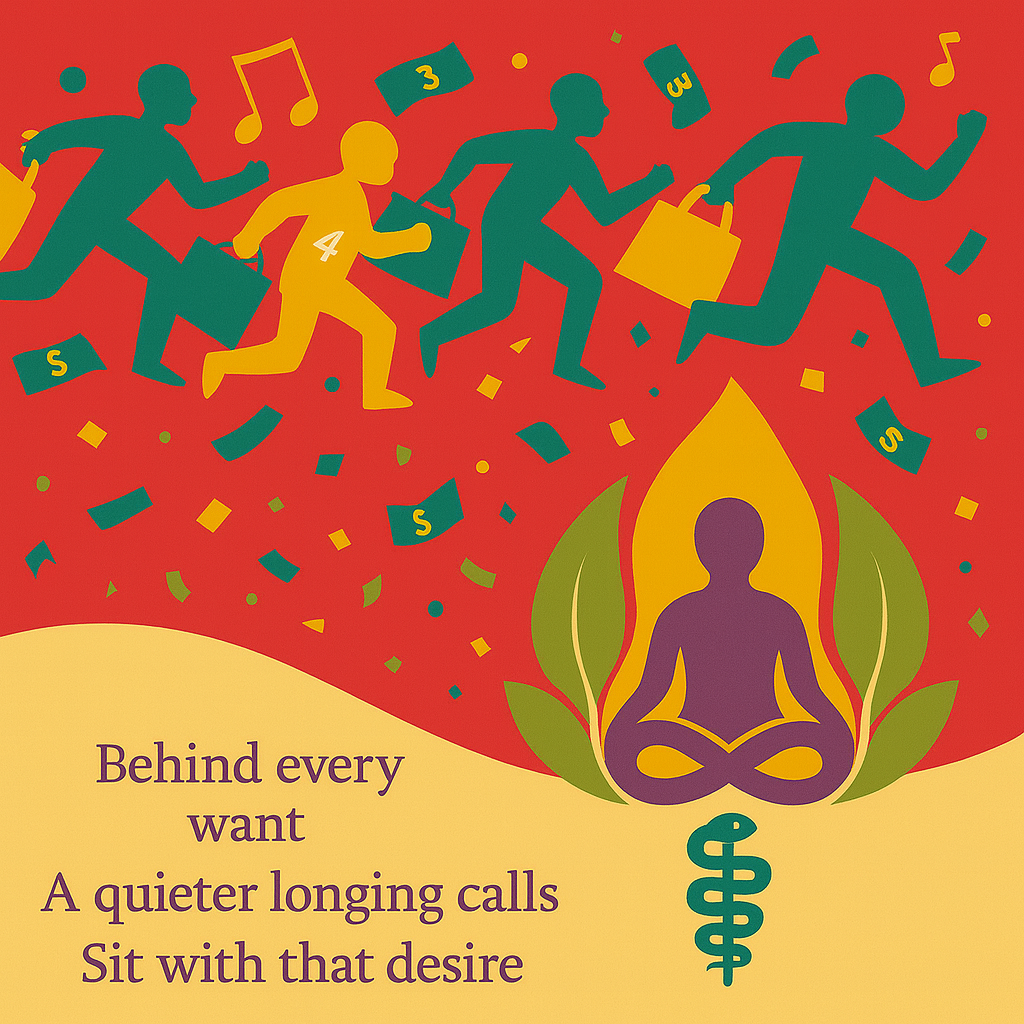
 As the world moves into Advent, a season meant to awaken hope, stillness, and sacred expectancy, we find ourselves surrounded by the bright noise of Black Friday. It’s a jarring contrast: inside, a quiet longing for renewal; outside, door-crasher deals, countdown clocks, and the restless pressure to acquire more. This tension makes an interesting mirror. What exactly are we trying to fill?
Black Friday tells us that happiness is something we can buy, delivered fast, wrapped neatly, and guaranteed to upgrade our sense of self. Advent whispers a different truth: that what we are actually yearning for is connection, meaning, and a felt sense of the holy moving within our lives.
Black Friday stirs the survival instinct—fear of missing out, fear of scarcity, fear of not being enough without the newest object. Advent invites the opposite. It asks us to pause, breathe, and trust that hope grows from within. It reminds us that something luminous is already germinating in the quiet soil of our hearts.
This juxtaposition is not a moral battle between “good Advent” and “bad consumerism.” It’s an opportunity to notice where we place our attention. Do we seek comfort in things, or do we let ourselves listen for the deeper desire under the desire? Even impulse shopping is often a sign that we’re craving warmth, belonging, beauty, or reassurance—core human needs that no box on our doorstep can truly satisfy.
Hope is not passive. It’s not wishful thinking. It’s an inner orientation that expands our capacity to imagine a future worth moving toward. Advent reminds us that hope is a discipline: choosing to believe in possibility even when we don’t yet see the evidence. In this way, Advent becomes the antidote to the manufactured urgency of Black Friday. One calls us to hurry; the other calls us home.
As you move through this weekend, you might pause and ask yourself: What is the hope I am quietly tending? What do I long for that cannot be bought?
These questions open the doorway from hustle to holiness, from frenzy to presence.