The Art of Connection: A Seven-Hour Full Moon Immersive Workshop in Authentic Relating
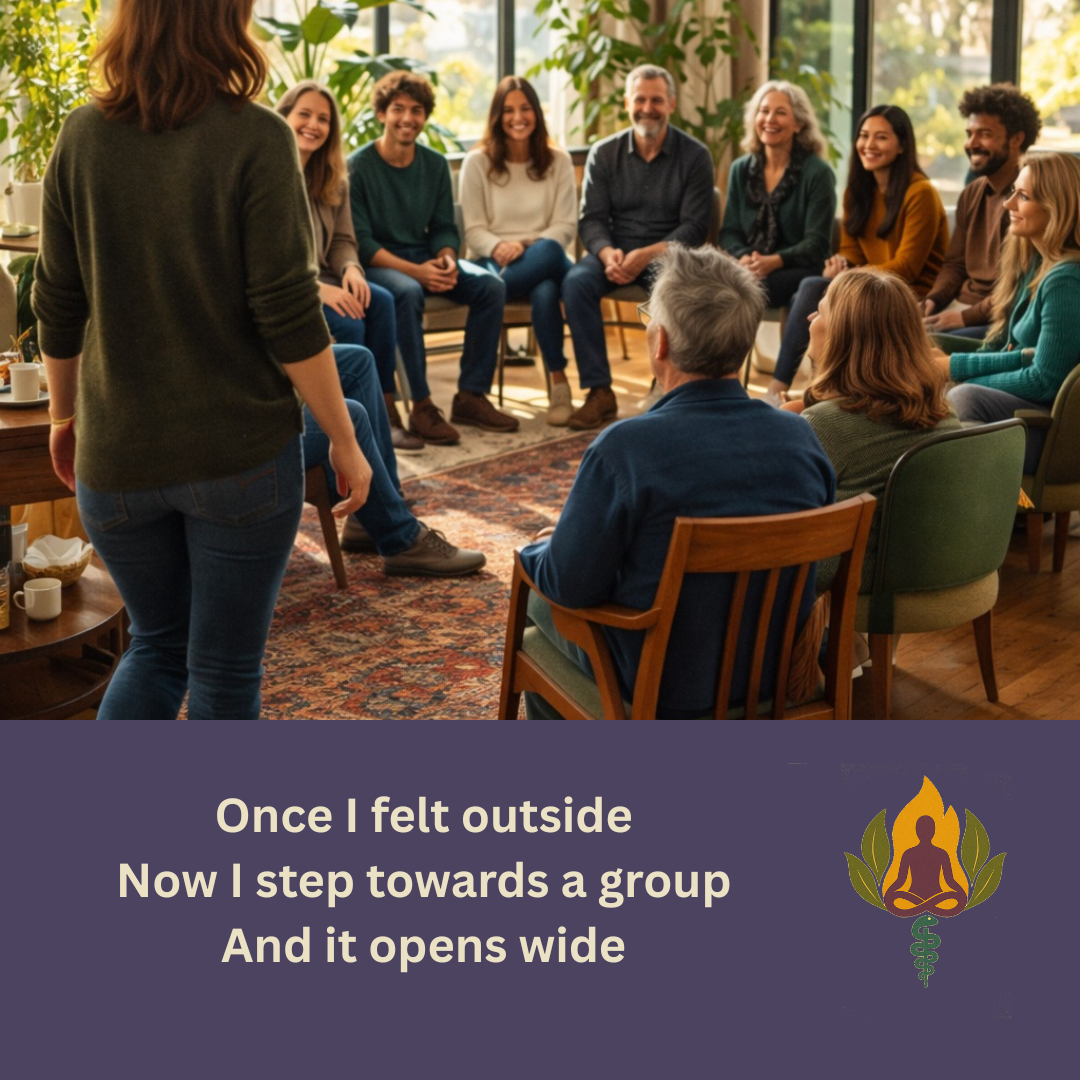 For most of my life, I felt comfortable one-on-one—but put me in a group, and something in me would tighten. I wanted connection, but expected rejection.
That pattern disappeared in a single experience—and it has never returned.
My first experience with MDMA happened decades ago, in a recreational club setting. I was with one trusted person, and under ordinary circumstances I would have stayed close to them, speaking mostly with the person I already felt safe with. That had always been my pattern in group environments.
But something was different.
We didn’t know anyone else in the room, but somehow I felt comfortable to approach strangers. I asked questions. I initiated conversation. And what I discovered in that moment changed me permanently.
People were warm. Welcoming. Interesting.
Not rejecting. Not dismissive. Not closed.
The insight landed viscerally: when I approached people with the expectation of connection, connection is what I received.
It wasn’t just an intellectual realization. It was embodied. My nervous system relaxed. My attention shifted outward. Instead of monitoring myself, I became curious about others. I consciously and intentionally anchored that new perception in my body, recognizing that I was experiencing something fundamentally different from my lifelong pattern.
That moment became a turning point. My social anxiety changed immediately, and it has never returned to its previous intensity. More than twenty years later, the shift remains.
Before that experience, my pattern was deeply ingrained. I can trace it back to when I was six years old. A classmate told me she was only allowed to invite five people to her party, and I wasn’t one of them. I remember the other children laughing and heading off together after school. I felt invisible, unimportant, not exciting, not cool. Throughout my childhood, I usually had one close friend who made me feel safe, but underneath that safety was a belief: the people who liked me were the exception, not the rule.
Over the years, I explored that wound in therapy many times. I revisited the six-year-old girl, offered her compassion, and gained understanding. Those experiences were meaningful—but none created the kind of immediate, embodied shift that happened in that single MDMA experience.
Interestingly, after those early explorations, I stepped away from psychedelic and Entheogenic substances for many years. At that time, I associated them primarily with recreational drug culture, which didn’t resonate with me. My orientation has always leaned toward natural and therapeutic approaches. For decades, I have used cannabis intentionally for pain management, choosing it in place of nonsteroidal anti-inflammatory drugs and other pharmaceutical options. My interest has always been in healing, not recreation.
Then, about five years ago, I attended a transformational retreat in Costa Rica. There, I discovered a community using entheogenic and psychedelic substances in a structured, intentional, and medicinal context. This was very different from what I had seen decades earlier. The focus was on personal growth, emotional healing, and meaningful integration within a safe container.
That experience opened a new chapter. I explored a variety of guided, intentional experiences within supportive group environments, and I saw firsthand how entheogenic and psychedelic experiences—when approached with care and facilitation—can create opportunities for profound shifts in perception, particularly for social anxiety, depression, and emotional patterns rooted in early life experiences.
At the same time, my original insight remained central: social anxiety often lives in self-focus. When attention shifts outward—toward genuine curiosity about others—connection becomes possible.
In my own case, that shift happened all at once. My expectation changed from “I will be rejected” to “people are generally warm and welcoming.” That change in expectation altered my behaviour, which altered my experience, which reinforced the new belief. The loop reorganized.
From a scientific perspective, researchers are exploring how certain substances may support neuroplasticity—the brain’s ability to form new pathways. From a lived perspective, what I experienced felt like a rewiring. A new relational template replaced an old one.
It is important to emphasize that these experiences are not something I recommend people pursue casually or alone. The presence of a safe, intentional container—with experienced facilitators—can make a profound difference in both safety and outcome.
While I do not provide substances myself, I recognize that many people feel called to explore entheogenic experiences. In these cases, careful attention to sourcing, purity, testing, and facilitation is essential, as these factors significantly influence both safety and effectiveness.
What I do offer is a grounded, experienced container for connection and integration. Through somatic work, breath practices, and authentic relating exercises, I support people in shifting attention out of self-consciousness and into genuine connection. Practices such as guided interaction, shared rhythm, and vocal expression can help regulate the nervous system and create new relational experiences.
Sometimes change happens gradually, through practice.
And sometimes, a single experience opens a door—and once you’ve stepped through, you never see yourself, or others, the same way again.
If this topic resonates with you, I will be hosting a small, carefully held retreat on May 2 focused on authentic connection, somatic awareness, and creating the kind of safe relational container where meaningful shifts can occur. Whether or not someone has had prior entheogenic experiences, these practices can help anchor new ways of relating in the body and nervous system.